

Thank you to everyone who has participated in the Workplace and Remuneration Survey over the past five years. This longitudinal analysis examines trends from 2022-2026 and provides insights into changes in workforce demographics, employment patterns, salary, and workplace experiences across urgent care. Not all survey components could be analysed longitudinally. Click here for the full report.
Response rate
Survey participation increased substantially from 25% in 2022 and 2024 to 43% in 2025 and remained stable at 41% in 2026.
Respondents by profession and workplace setting 2022-2026
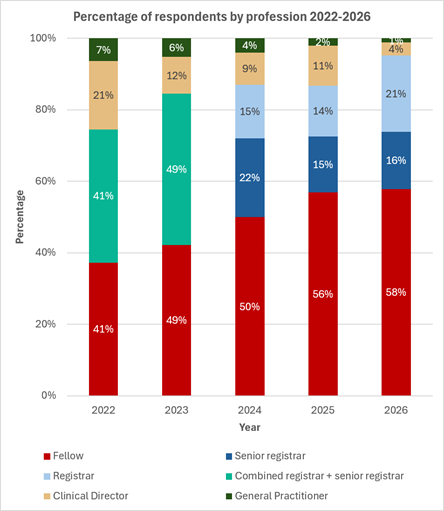
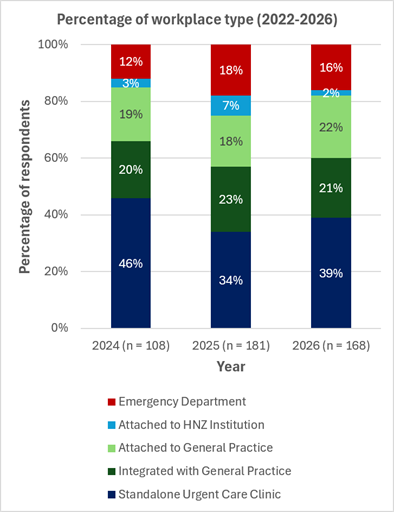
Over time, Fellows have made up an increasing proportion of respondents, rising from 41% in 2022 to 58% in 2026. Registrars also represented a growing share of respondents, while Clinical Directors and GP Specialists accounted for progressively smaller proportions. Workplace settings remained relatively stable, with stand-alone urgent care clinics and urgent care clinics integrated with or attached to general practice consistently representing the majority of respondents.
Employment type and hours worked per week
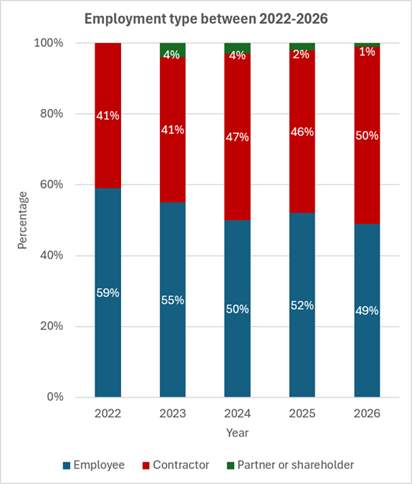
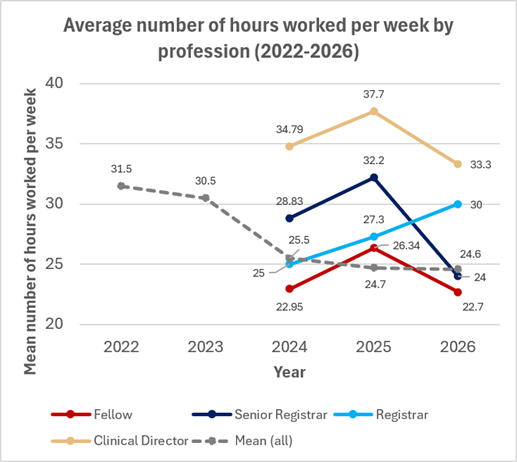
Contractors increased from 41% of respondents in 2022 to 50% in 2026, while the proportion of employees declined correspondingly. During the same period, average hours worked per week decreased from 31.5 hours to 24.6 hours overall, although Registrar hours increased steadily between 2024 and 2026.
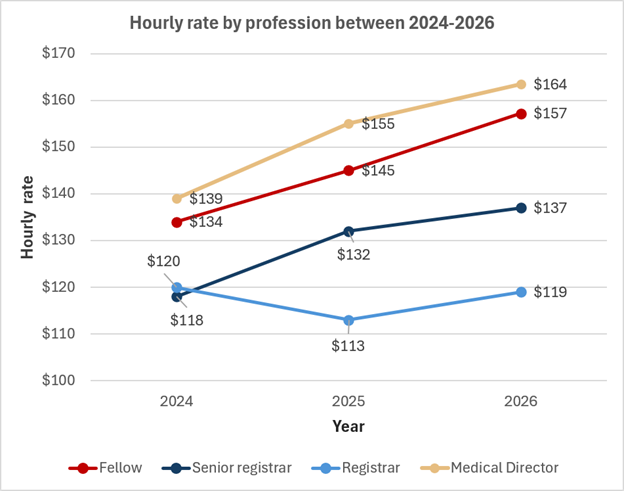
Hourly rate
Hourly rate continued to rise across most groups. Between 2024 and 2026, Medical Directors reported the highest hourly rates, increasing from $139 to $164 per hour, while Fellow rates increased from $134 to $157 per hour. Senior Registrar rates also rose steadily, whereas Registrar rates remained relatively stable over the same period.
Workplace and wellbeing
Workplace culture and wellbeing measures were generally positive and improved over time. Agreement that workplaces support staff wellbeing increased from 57% in 2024 to 74% in 2026, while support for senior staff rose from 84% to 91%. Although perceptions of workplace support for work-life balance declined from 65% in 2024 to 57% in 2026, respondents reported improved personal work-life balance, with positive responses increasing to 79% in 2026.
Respondents also reported increasingly positive perceptions of workplace culture. Confidence that bullying, harassment, and discrimination are not tolerated increased between 2024 and 2026, alongside greater confidence in workplace reporting processes. Perceptions of workplace support during difficult personal circumstances similarly improved, increasing from 74% agreement in 2024 to 80% in 2026.