
- This update includes a report on the recent Goodfellow Symposium 2026
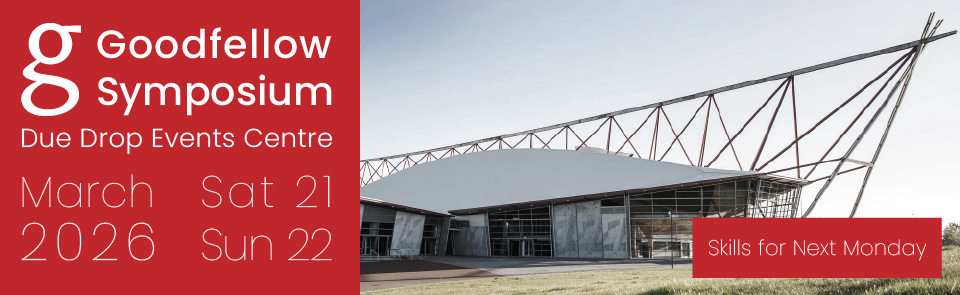
The Goodfellow Symposium 2026 took place over the weekend of March 21 and 22. It was great to see so many of you in attendance.
Each year, as a partner of the Symposium, the College is invited to provide 8 speakers for an urgent care stream. They then arrange 6 talks on Saturday and 2 on Sunday. The Symposium is for the whole of primary care, and the various streams provide CPD across the spectrum of conditions managed throughout the community. The urgent care stream is for talks on acute injury and illness topics, and anything related to urgent care.
This year we had a great lineup of talks and speakers, and this was evident by the full crowds in attendance.
Saturday 21st March
Dr Paul Huggan, infectious disease Specialist and a founder of the Sepsis Trust, provided the first talk of the weekend. He talked about the current thinking around why sepsis happens, the work of the Sepsis Trust and the new National Sepsis Pathways. Identifying sepsis early and properly safety-netting patients who we see with infection is a vital part of urgent care practice.
Next up, we had Dr Rebecca Schroll, a trauma surgeon originally from the USA, who looked at the hidden trauma that might walk into an urgent care clinic. Some important takeaways to consider included being wary of heart rate as a sign of shock in patients on beta blockers, the high risk of injuries to ribs 1, 2 and 3, spotting compartment syndrome early, finger decompression for tension pneumothroaces, and the use of a tourniquet. This was a great talk, and Rebecca stepped in at the last minute, for which we are very grateful.
The third talk was by Professor Nicola Dalbeth, an academic rheumatologist, and she talked about acute gout management. This was a fascinating look at gout, why it happens and how to not only manage the acute flares but also prevent recurrence. We discussed the role of urgent care in trying to engage patients with gout prevention. Some interesting take-home thoughts were the fact that diet plays a very small part in gout flares and the possible link between gout flares and CVD events.
For the fourth talk of the day, Dr Susie Cunningham, paediatric emergency physician at Starship Hospital, took us on a safari in which she considered the causes of fever in kids alongside 6 of the big African animals. This was a fun way to look at how to decide which fevers are of concern, and the analogies to the animals helped to make the talk memorable. Watch out for those Hippos.
We then had Dr Craig Ellis, emergency and pre-hospital physician and Deputy Medical Director for Hato Hone St John. Craig looked at transient loss of consciousness (TLOC) and syncope, examining which ones need referral and which ones need further investigation. A fascinating talk, and my take-home is to do an ECG in all cases of TLOC.
The final talk of Saturday saw Dr Fiona Stewart, a cardiologist from Greenlane, talk about how to manage hypertensive crises in the community. A concise and well pitched talk, full of useful tips to help guide us in the correct management and referral of these cases.
Sunday 22 March
Sunday started off with a talk by Dr Casey Smith, an emergency physician from Auckland City Hospital. He looked at managing risk in working up chest pain presentations. A very entertaining talk, key take home considerations were to be aware of anchoring biases, take a thorough history, use decision support tools judiciously and be cautious of relying on chest wall tenderness as a rule-out.
Finally, Dr Stephanie van Dijck, paediatric orthopaedic surgeon at Starship, looked at paediatric orthopaedic injuries presenting through urgent care. Lots of useful tips in this talk, including red flags to consider, but one of my main take home points was that a normal XR in someone you suspect clinically has SUFE does not exclude it, so we should chat to ortho acutely to consider higher imaging.
Summary
Overall, as always, the Goodfellow Symposium is a great weekend of education and networking. It is an opportunity to meet friends, refresh your knowledge and learn new things. The talks were perfectly aimed at UC work and provided important teaching to us all, and it was therefore no surprise that the room was consistently filled and the questions to the presenters were intelligent and well considered.
We are grateful to the Goodfellow team for their excellent organisation and for including urgent care in their event. We will start planning speakers for next year, and I hope to see as many of you as possible there.
Finally, a huge thank you to all the specialists who gave their time on a sunny weekend to provide such excellent urgent care education. We appreciate your support and the collegiality with which you approached these sessions.
Ngā mihi nui,
Dr. Guy Melrose – Director of Professional Development